Keloid瘢瘤
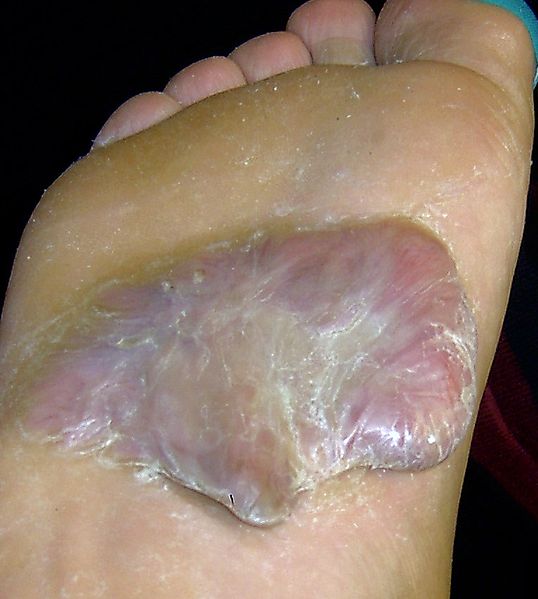
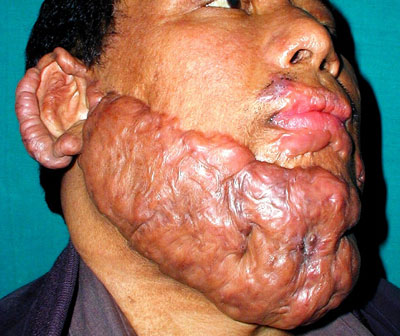
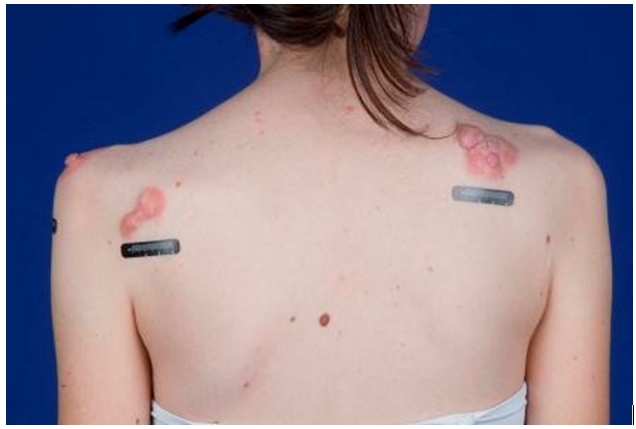
A keloid is a type of hypertrophic scar with mainly type I and some type III collagen which results in an overgrowth of tissue at the site of a healed skin injury. Keloids are firm, rubbery lesions or shiny, fibrous nodules, and can vary from pink to flesh-colored or red to dark brown in color. A keloid scar is benign, non-contagious, and usually accompanied by severe itchiness, sharp pains, and changes in texture. In severe cases, it can affect movement of skin. (Keloids should not be confused with hypertrophic scars, which are raised scars that do not grow beyond the boundaries of the original wound.)
Keloids expand in claw-like growths over normal skin. They have the capability to hurt with a needle-like pain or to itch without warning, although the degree of sensation varies from patient to patient.
If the keloid becomes infected, it may ulcerate. The only treatment is to remove the scar completely. However, the probability that the resulting surgery scar will also become a keloid is high, usually greater than 50%.
Keloids form within scar tissue. Collagen, used in wound repair, tends to overgrow in this area, sometimes producing a lump many times larger than that of the original scar. Although they usually occur at the site of an injury, keloids can also arise spontaneously. They can occur at the site of a piercing and even from something as simple as a pimple or scratch. They can occur as a result of severe acne or chickenpox scarring, infection at a wound site, repeated trauma to an area, excessive skin tension during wound closure or a foreign body in a wound. Keloids can sometimes be sensitive to chlorine.
Biologically, keloids are fibrotic tumors characterized by a collection of atypical fibroblasts with excessive deposition of extracellular matrix components, especially collagen, fibronectin, elastin, and proteoglycans. Generally, keloids contain relatively acellular centers and thick, abundant collagen bundles that form nodules in the deep dermal portion of the lesion. Keloids present a therapeutic challenge that must be addressed, as these lesions can cause significant pain, pruritus (itching), and physical disfigurement. They may not improve in appearance over time and can limit mobility if located over a joint.
Keloids affect both sexes equally, although the incidence in young female patients has been reported to be higher than in young males, probably reflecting the greater frequency of earlobe piercing among women. There is a fifteen times higher frequency of occurrence in highly pigmented people. It is speculated that people who possess any degree of African descent, regardless of skin color, may be especially susceptible to keloid occurrences.